That predictability comes with a trade-off. Simplicity doesn't always equal savings, and the flat rate that looks great on a pricing page might not be the cheapest option once your volume grows or your customer mix shifts.
Which model fits your business depends on how many cards you run, how large your average sale is, whether you sell in person or online, and how much time you want to spend deciphering statements.
This guide covers what flat-rate processing actually includes, its real strengths and weaknesses, how it compares to the alternatives, and a practical checklist for reading any quote or statement you're handed.
Key Takeaways
- Flat-rate pricing simplifies budgeting but doesn't guarantee the lowest total processing cost
- The right plan depends on volume, average ticket, sales channel, and card mix, not the advertised rate alone
- "Flat rate" often varies by transaction type: card-present, online, and keyed rates rarely match
- Compare real statements and complete fee schedules before switching providers
- Reassess pricing as your business adds ecommerce, recurring billing, or new locations
What Is Flat-Rate Credit Card Processing?
Flat-rate pricing, also called blended or flat-fee pricing, charges one combined rate, typically a percentage of the sale plus a fixed per-transaction fee, regardless of what kind of card a customer uses. A processor might quote 2.6% + $0.10 per transaction and apply that formula across most in-person sales.
That single number bundles several separate costs:
- Interchange: the fee card-issuing banks collect, set by Visa and Mastercard and updated roughly twice a year
- Network assessments: fees the card brands themselves charge
- Processor fees: what the provider charges for its own service
- Platform or service fees: sometimes folded in, sometimes billed separately
Providers rarely apply one flat rate to everything. Card-present EMV transactions carry lower fraud risk than online or manually keyed ones, so many flat-rate plans post separate rates for in-person, online, keyed, and recurring payments.
Predictable Isn't the Same as Transparent
A flat rate makes your statement easy to read. It doesn't tell you how much of that rate covers interchange versus processor fees. Two processors quoting 2.9% + $0.30 could have very different processor fees built in, with no way to tell from the rate alone.
A Simple Illustration
Say a coffee shop processes $20,000 in card sales across 2,000 transactions monthly, at an illustrative rate of 2.6% + $0.10:
- Percentage cost: $20,000 × 2.6% = $520
- Per-transaction fees: 2,000 × $0.10 = $200
- Total: $720, or a 3.6% effective rate
These figures are illustrative only, not current market averages.
How Flat-Rate Compares to Other Models
| Model | How Pricing Works | Best Suited For |
|---|---|---|
| Flat-rate/blended | One rate covers most transactions | Simplicity-focused, lower-volume merchants |
| Interchange-plus | Interchange passed through + fixed processor fees | Established, higher-volume merchants |
| Tiered | Transactions sorted into provider-defined buckets | Rarely the most transparent option |
| Subscription | Flat monthly fee + near-cost interchange | High-volume merchants comfortable with a fixed bill |
Pros of Flat-Rate Credit Card Processing
Easier Budgeting and Forecasting
When every transaction follows the same formula, projecting next month's processing cost becomes basic multiplication. New businesses with lean back-office teams get an expense line that behaves consistently without requiring anyone fluent in interchange categories.
Statements You Can Actually Read
Flat-rate statements skip the alphabet soup of interchange tiers, downgrades, and multiple processor-fee lines. Reconciling card deposits against sales becomes a bookkeeping task, not a research project.
Faster Account Approval, With Caveats
Before a business can accept cards, its provider has to collect an application, review the business (underwriting), and set up the account. The industry calls this process "onboarding." Flat-rate providers often finish it faster than traditional bank-affiliated processors.
A 2025 Digital Transactions report on World Payments Report data found that onboarding a merchant through a traditional bank averaged $496 and could take seven days. For non-bank payment technology companies, it averaged $214 per merchant and sometimes took under an hour.
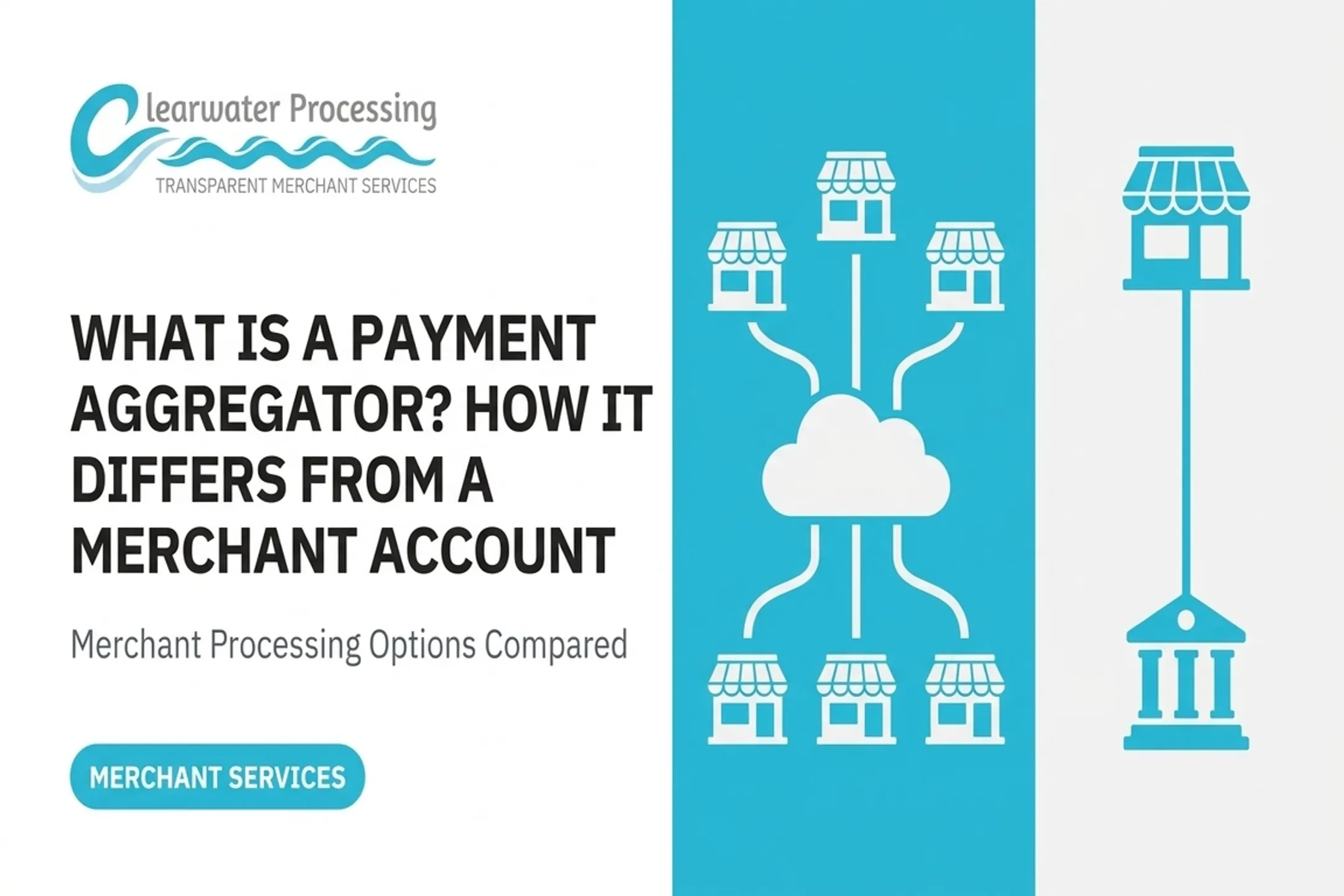
Industry coverage often shortens "payment technology companies" to "paytech." The term isn't the name of one specific processor. It's a general label for payment aggregators (also called payment facilitators), such as Stripe, Square, and PayPal. These providers sign businesses up online and process their card payments under one shared master account, instead of opening a separate merchant account for each business through a bank. For a closer look at that model, see the pros and cons of payment aggregators like Stripe, Square and PayPal and how a direct merchant account compares with a payment aggregator.

Many flat-rate providers are payment aggregators, but the cost and speed gap comes from how the account is opened, not from flat-rate pricing itself. A fast online sign-up can also mean less review up front, so confirm underwriting requirements, funding holds, and documentation before assuming it means fewer questions down the road.
Where Flat-Rate Tends to Shine
This model suits businesses that value simplicity over shaving every basis point:
- Seasonal or pop-up sellers without predictable year-round volume
- Mobile service providers running card readers off a phone
- Early-stage businesses still building sales history
- Small-ticket retailers where transaction fees stay modest
One Provider, Multiple Payment Channels
Many flat-rate plans bundle card-present terminals, online checkout, invoicing, and virtual terminals under a single account. Multi-channel setups aren't unique to flat-rate plans, though. Clearwater Processing's tailored processing environments, for example, combine ecommerce gateways, standalone EMV terminals, and back-office billing. A business isn't juggling three vendors and three statements.
The operational payoff is real: less staff training, simpler reconciliation, and fee lines that map back to what appears on a receipt.
Cons of Flat-Rate Credit Card Processing
It Can Cost More at Scale
According to the Richmond Fed's 2025 policy analysis, interchange typically represents 1% to 3% of a credit-card transaction, and total merchant fees usually range from 1.5% to 3.5% of transaction value. Flat-rate plans price to cover costs across every merchant, including riskier ones. Established or high-volume merchants, especially those with a strong debit mix, often find interchange-plus pricing lands lower once they have a solid processing track record.

Percentage vs. Fixed Fee: Two Different Pain Points
High-ticket sales feel the percentage component most. A 2.9% rate on a $3,000 custom order costs $87.
Small transactions feel the fixed fee most. A $0.30 fee on a $5 purchase adds 6% to that single sale.
These are illustrative comparisons, not universal thresholds. Your actual break-even point depends on your specific transaction mix.
"Flat Rate" Rarely Means One Rate
Rates inside one flat-rate plan often change with how the card is accepted. Card-present, online, keyed, and recurring payments can price differently, and rewards, corporate, and American Express transactions frequently do too. The headline number is usually a best-case scenario, not your true average.
The Transparency Gap
Since interchange, assessments, and processor fees are bundled together, you can't tell from a flat-rate quote how much of it goes to processor fees. Two providers quoting the same 2.6% could have very different processor fees inside that rate, making apples-to-apples comparisons difficult.
Costs Outside the Headline Rate
Watch for charges sitting outside the advertised rate:
- Monthly software, gateway, or platform fees
- PCI non-compliance fees
- Chargeback and refund fees
- Early termination and minimum-volume fees
- Expedited-funding fees
Refunds are a good example, and one of the pros and cons of payment aggregators like Stripe, Square and PayPal worth checking: Clearwater returns the interchange merchants paid when a refund on Visa and Mastercard is issued, while Stripe keeps its fee. Per Stripe's own published pricing, on standard pricing "the payment processing, Connect and currency conversion fees from the original transaction are not returned."
A statement review, such as Clearwater Processing's merchant statement analysis, catches these buried charges. Clients see 10%–30% savings on average once hidden fees are identified and compared against alternative pricing.
Scalability Concerns
A plan that felt convenient at launch can become restrictive as the business adds locations, ecommerce, or higher volume. What worked for a $10,000-a-month pop-up may not fit a $200,000-a-month retailer with three storefronts.
How to Decide if Flat-Rate Processing Fits Your Business
Match the pricing model to your volume, average ticket, and growth stage—not the other way around.
When Flat-Rate Makes Sense
- New businesses without processing history
- Mobile or field-service providers
- Seasonal or pop-up sellers
- Low-volume, small-ticket retailers
- Operators who want fast setup over squeezing every basis point
When to Request Interchange-Plus Quotes Instead
- Established merchants with a year or more of statements
- High-volume retailers processing $50,000+ monthly
- B2B businesses with large average tickets
- Merchants with heavy debit-card volume
- Businesses that want a line-by-line view of processor fees
Calculate Your Effective Rate
Pull two or three recent processing statements and run this calculation:
- Add total processing costs for the period, including percentage fees, per-transaction fees, and any monthly or incidental charges.
- Divide by total card volume processed in that same period.
- Multiply by 100 to get your effective rate as a percentage.
Compare that number, not the headline rate, against any new proposal.
Request Side-by-Side Proposals
Ask providers to quote against your actual transaction history, with costs broken out for:
- Card-present vs. card-not-present volume
- Keyed and recurring transactions
- Refunds and chargebacks
- Hardware, software, and funding fees
The lowest rate on paper isn’t automatically the best deal. Also weigh:
- Funding speed
- Integrations with your existing tools
- Support quality and response time
- Security tools
- Staff time needed to manage the account month to month
What to Check Beyond the Headline Rate
Contract Terms and Fee Schedule
Before signing, review the full fee schedule, not just the headline rate:
- Contract length, renewal terms, and cancellation provisions
- Hardware ownership versus leasing terms
- Account minimums and reserve policies
- Funding cutoff times and conditions that could trigger a rate change
Security and Compliance Features
Payment security belongs in the same evaluation as pricing. Confirm the provider covers:
- EMV and contactless acceptance
- Tokenization and encryption
- PCI DSS support
- Address and card verification tools
- Fraud controls with chargeback assistance
Clearwater Processing bundles PCI compliance support with $100,000 breach protection insurance. That coverage is a backstop for a security incident, not a substitute for the controls above.
Operational Features Worth Comparing
- Next-day funding versus standard settlement timing
- Unified reporting across channels
- QuickBooks or Xero integration
- Recurring billing with automatic updating of customers' expiring cards, invoicing, and virtual terminal options
- Responsive, human support
Confirm the Fine Print on Disputes
Ask providers directly how they handle refunds, disputed charges, account holds, and hardware failures before signing, and who you'll actually reach.
Can You Pass Credit Card Processing Fees to Customers?
Two different programs get lumped under this question, and they work differently:
- A surcharge adds an extra charge specifically for using a credit card.
- A cash-discount program advertises a higher regular price and offers a discount for cash, check, or debit.
The Rules Aren't the Same Everywhere
Card networks set their own caps:
- Visa: lesser of your credit-card discount rate or 3%, with 30 days' advance notice plus clear signage and receipt disclosure (Visa's merchant surcharging guidance)
- Mastercard: 3% surcharge cap under similar notice and disclosure rules
- Debit and prepaid: surcharging not allowed by either network
State law adds another layer. Some states prohibit surcharges outright and permit only cash discounts. Others allow surcharging within specific caps and notice requirements, and these rules change by state.
Confirm current requirements with your processor and a qualified legal or compliance professional before implementing either program.
Passing fees to customers lowers your processing expense, but it can introduce checkout friction, signage requirements, and pushback, especially if competitors absorb the cost.

If you go this route, ask your processor how it handles the disclosure and configuration side. The legal groundwork remains the merchant's responsibility.
How Clearwater Processing Can Help You Weigh Flat-Rate Pricing
Clearwater Processing doesn't put every merchant on one blended rate; it offers transparent, competitive pricing tailored to each business. Comprehensive reporting shows what you're paying as volume changes. Next-day funding supports cash flow whichever pricing model you land on. When a refund, dispute, or account hold needs attention, you call your single point of contact: a dedicated representative with industry experience, on their personal cell phone, backed by 24/7/365 U.S.-based support.
Frequently Asked Questions
What is a good rate for merchant services?
A "good" rate depends on your transaction type, volume, average ticket, and card mix, plus every recurring or incidental fee on your statement. Calculate your own effective rate from recent statements rather than comparing against a single advertised benchmark.
What are flat-fee merchant services?
Flat-fee, or flat-rate, merchant services generally charge one percentage plus a per-transaction amount for most sales. Card-present, online, keyed, and other transaction types often carry different rates within the same plan, despite the "flat" label.
Can you legally charge a credit card processing fee?
Yes. Surcharging credit cards is permitted in most states, but card-network rules, state law, disclosure requirements, and caps vary by location. Debit cards can't be surcharged at all. Confirm current requirements with your processor and a compliance professional before implementing one.